Robots Should Help Us RESET the Planet
We can build machines that dance, compete and impress an audience. Environmental repair deserves the same ambition—and a much stronger place in the conversation about progress.
Watching a robot play football is impressive. Watching one perform a carefully coordinated routine can feel like a glimpse of the future.
But it also raises a reasonable question.
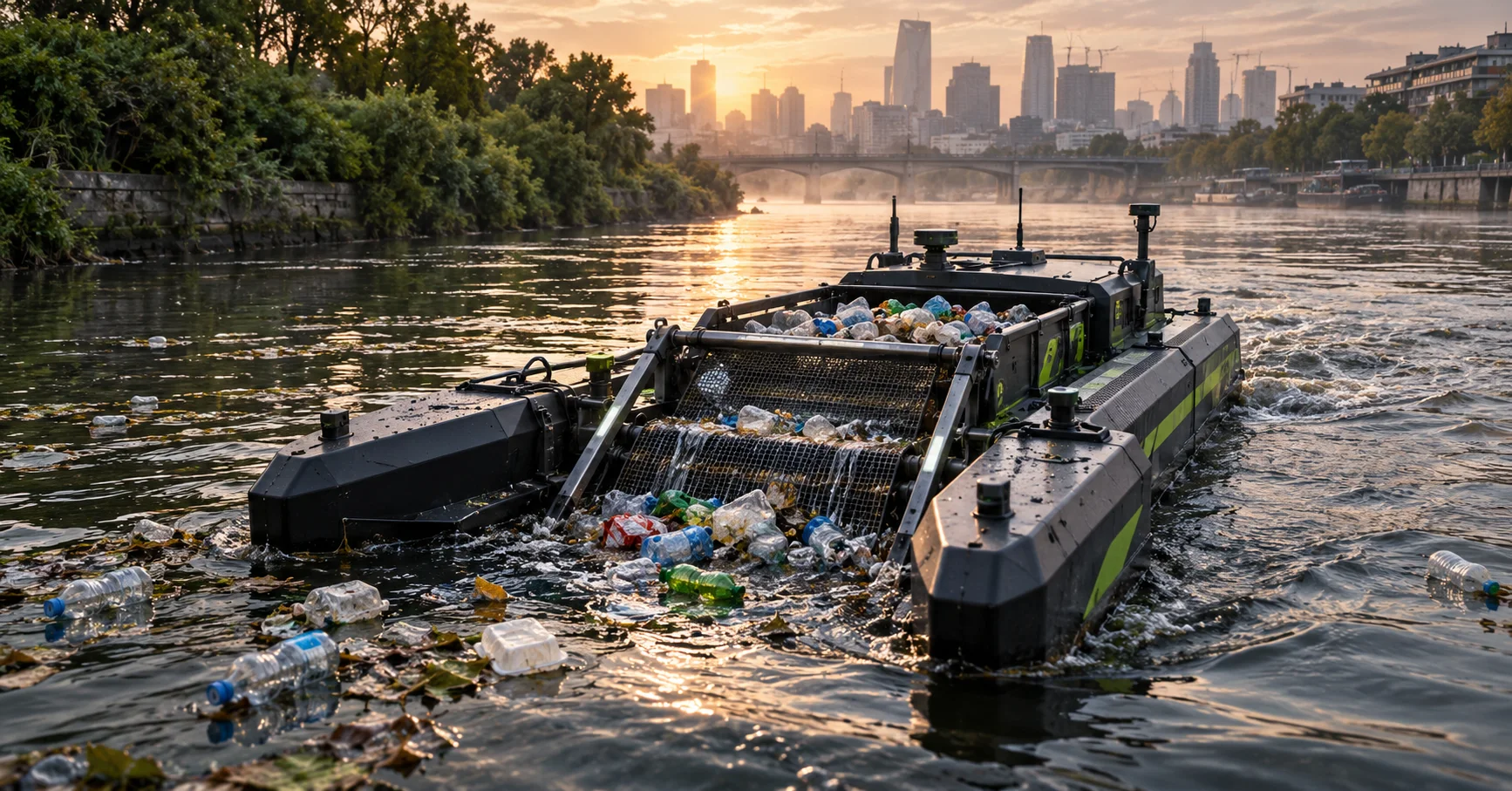
Where are the machines collecting plastic from our rivers? Where are the robots keeping workers away from dangerous substances, inspecting polluted sites and helping repair the damage humans have left behind?
Some are already there. That makes the next question more urgent: how do we make useful environmental robotics an everyday service rather than an occasional innovation story?
For Felled.org, that should be a defining challenge for this generation of technology.
The cleanup robots already exist
Clearbot develops electric robotic boats for work including floating-waste collection. The company describes projects in India and the Philippines, among other locations. RanMarine’s WasteShark+ is a remotely controlled vessel designed to collect floating waste, biomass and oils. These examples establish that practical equipment exists, although manufacturers’ performance claims need to be distinguished from independently verified results.
Environmental robots do not need to look like people. A small vessel that repeatedly collects rubbish from an accessible waterway may be better suited to its task than a walking machine with hands.
That is an important shift in how we imagine progress. The useful question is what a machine accomplishes, how reliably it works and whether it improves on the alternatives.
Dangerous work is already part of the mission
At Sellafield, robots are being used to inspect difficult areas and gather environmental and radiological information, reducing the need for people to enter hazardous locations. These are practical applications supporting nuclear decommissioning.
The distinction between an operational tool and an experiment matters, however.
In a contamination-swabbing trial announced in February 2026, a robot collected blue chalk representing contamination from a mock-contaminated surface. The test took place in a restricted area containing radioactive material. It demonstrated a specific capability; it did not demonstrate that robots can independently manage every contaminated spill.
Useful progress deserves attention without exaggeration. A machine that performs one hazardous task reliably can still make a meaningful difference.
Football has a defence. Environmental repair needs a mission.
It would be easy to dismiss robot sport as wasted ingenuity. The research case is more substantial.
RoboCup describes football as a shared challenge for developing capabilities including vision, real-time planning, motor control and cooperation. Its wider activities include rescue, domestic assistance and industrial applications. A football pitch can therefore be a testing environment for skills with uses elsewhere.
We can recognise that value and still demand equally ambitious environmental goals.
What would a long-term robotics challenge look like if success meant keeping a river catchment cleaner, reducing workers’ exposure to hazardous waste or detecting pollution before it spread?
Such programmes would need public targets, sustained funding and evidence that the technology works beyond a demonstration.
Why deployment takes more than a clever machine
A robot that succeeds in a controlled setting may struggle when objects, terrain and conditions change.
The OECD Nuclear Energy Agency identifies several obstacles to robotic deployment in decommissioning: uncertain environments, complicated handling tasks and the difficulty of repairing equipment in places people cannot easily enter. These are engineering and operational problems that enthusiasm alone cannot solve.
Environmental projects also need a complete operating plan. Who maintains the equipment? Who supervises it? What happens during failure? Where does the collected material go?
For toxic chemicals, collection is only one possible stage. Identification, containment, treatment and disposal require appropriate expertise and safeguards. Moving a dangerous substance does not automatically make it harmless.
This is why procurement and maintenance deserve attention alongside invention. Buying a robot is the beginning of a service, not its completion.
RESET must mean more than collecting yesterday’s rubbish
A river-cleaning machine can have value while pollution continues upstream. But it cannot give producers, operators or public authorities permission to keep adding to the problem.
UNEP’s work on plastic pollution calls for changes across reuse, recycling, product design and waste management, alongside action on pollution already in the environment. Cleanup belongs within that larger effort.
Nor can environmental recovery literally restore every ecosystem to an earlier state. Some damage cannot be reversed. “RESET” should express a commitment to repair what we can and stop making the problem worse.
Felled.org proposes five priorities:
- Reduce pollution before it reaches nature.
- Equip workers with tools that reduce dangerous exposure.
- Scale cleanup systems that demonstrate useful results.
- Evaluate costs, energy use, reliability and ecological effects.
- Track recovered waste through to its final destination.
These are proposed standards for progress. They would help distinguish a compelling demonstration from a service that delivers lasting benefit.
We should celebrate technology that makes human life easier. We should also ask it to make environmental protection more achievable.
Show us machines doing difficult work reliably. Show us safer conditions for workers. Show us independently measured results and a clear account of what happened to the waste.
Robotics has already begun contributing to environmental repair.
Now give that work a bigger mission.